
, 5 min de leitura
Measuring compost windrow temperature: where, when and with what
A temperature only has value if it is taken in the right place, at the right pace and in the same way every time. Here are the simple rules that turn a reading into reliable data you can compare, set alerts on and show during an audit.

Why measure in the core of the pile
A windrow’s heat comes from microbial activity, and it is highest at the centre. At the surface the pile cools in contact with the air: a shallow reading can show much less than the core and give a false impression of a cold pile.
That is why a GreenSensor probe carries its sensor at the tip of the rod, to read core temperature. A second sensor in the housing measures air temperature, a reference to understand the gap between the pile and its surroundings.
How deep to push the probe
Aim for at least 50 cm, and ideally between 80 cm and 1 m, depending on the height of the windrow. The 1 m, 1.5 m and 2 m probes cover the different sizes. On the 2 m models, an optional 2nd measuring point can be added at 1 m, in the middle of the rod, to follow two levels in the same pile.
Always push the probe in by hand, using the two handles, and keep the same spot for the whole campaign: that is what makes curves comparable.
How often to measure
A manual round gives one point a day, sometimes fewer. A fast temperature rise, a cooling after turning or a runaway can go unnoticed between two visits.
A GreenSensor probe measures every hour, day and night and over weekends, with ±0.5 °C accuracy. The replaceable battery lasts 5 years at that rate, with no cable or power supply on the windrow.
Set targets and alerts
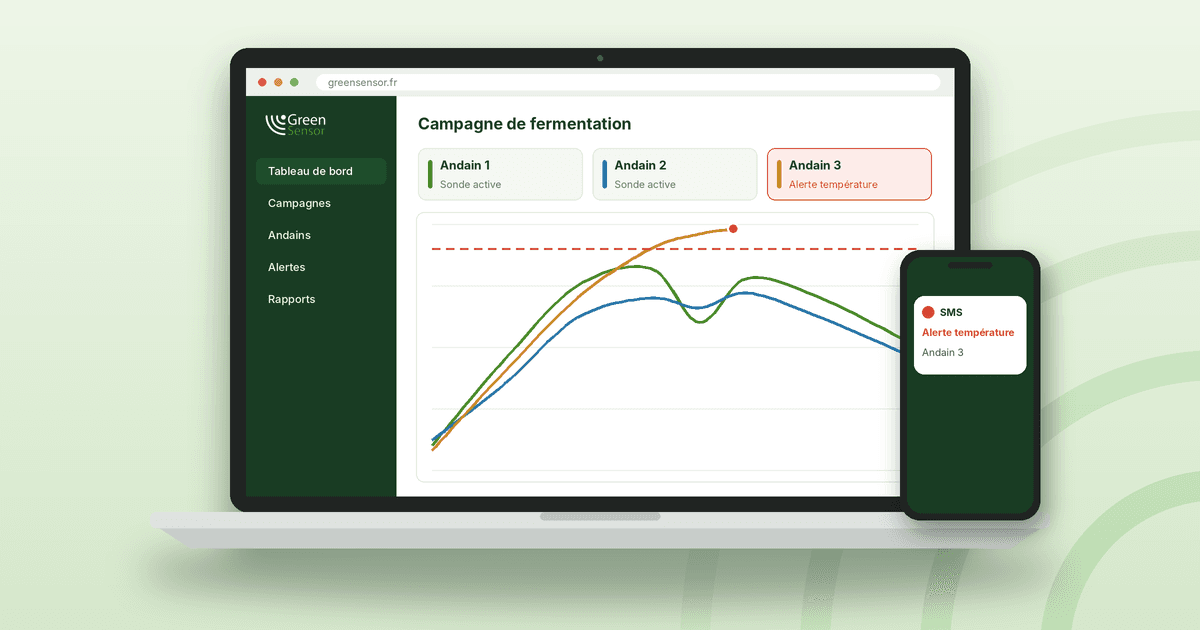
Measuring is not enough: you need to know what you expect. For each phase you define temperature and duration targets, for example 14 days at 55 °C or above. The platform tracks their progress and can end the phase automatically when they are reached.
Also set a high alert threshold, to be warned by SMS or e-mail before a pile runs away. Several sites place it around 85 °C; adjust it to your materials.
Common mistakes
A few habits quickly skew readings.
- Measuring too close to the surface, where the pile is cooler.
- Changing depth or position during a campaign.
- Comparing readings taken at different times of day.
- Looking only at pile temperature, without the air temperature.
- Not keeping the history, when it serves as proof.
Keep the proof
Every measurement is kept. For each phase the platform issues a dated report with the targets, the percentage reached, the exact periods and the full curve, which you can export or print for your audits.
In the core of the pile, at the same depth, every hour and with clear targets: these four rules are enough to turn scattered readings into reliable monitoring. Alerts and the report take care of the rest.
Um projeto de monitorização de temperatura?
Um consultor da Prosensor apresenta o GreenSensor e responde às suas perguntas.